“I thought I was a power user. Then I started working with Mark and realized I had no idea what was actually possible.”
Read the case studyDone-for-you · Built in 6–8 weeks
Your entire revenue operation. One AI operating system.
I build bespoke AI operating systems that replace 5–7 SaaS logins and the busywork between them — wired to how your team actually works. Live in 6–8 weeks.
Built by Mark Fershteyn — operator, $8M-raised founder, ships production AI without an engineering team.
Trusted by non-technical builders at
Your data is everywhere. Your answers are nowhere.
Your team built 25 Lovable apps that don’t talk to each other. Your reps live in seven tabs. The CRM is half-filled, the call recordings sit unwatched, and the answer to a simple question — which deals are actually real? — takes someone an afternoon to assemble.
More SaaS won’t fix this. Another point tool just adds another tab. What you’re missing isn’t software — it’s a system that connects the software you already pay for.
A Revenue OS replaces the logins and the busywork between them with one authenticated interface, built around your workflows — with an AI reasoning layer that reads your data and does the work, not just stores it.
“It replaced five SaaS logins and the full-time ops hire we were about to make. The whole team runs off one screen now.”— Operations lead, B2B services firm
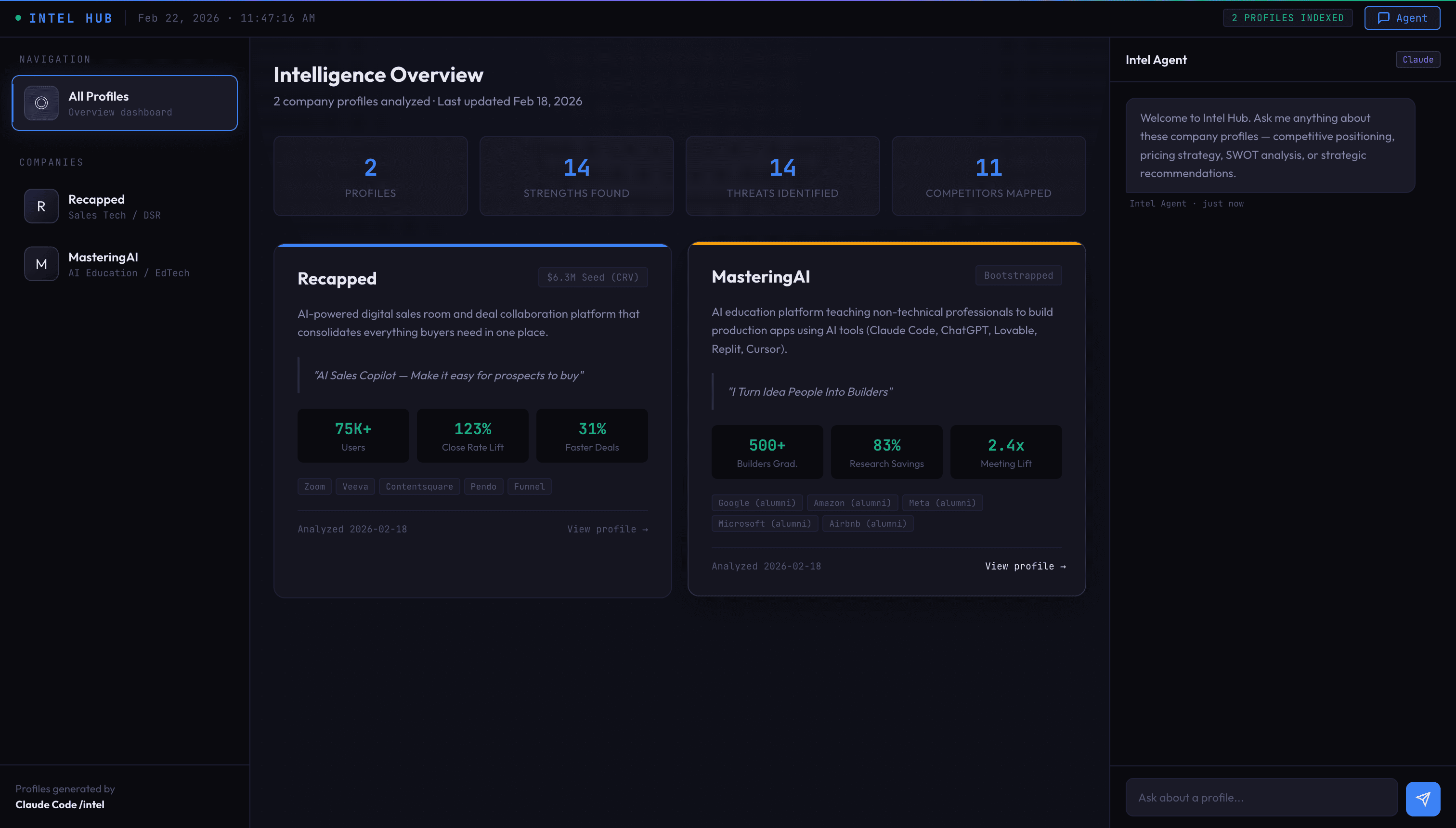
One interface, wired to your stack
What you get
3–4 custom mini apps in one authenticated UI — wired to your CRM (Salesforce/HubSpot), Slack, call recordings (Gong/Fathom), and billing — with an AI reasoning layer, role-based access, and audit logs. Pick the workflows that matter most:
Account research & plans
A full account profile and plan — pain points, positioning, proof points — in seconds, not a half-day.
Prospecting & lead lists
ICP scoring and enrichment agents that build and grade your lists instead of your reps.
Call review at scale
Every call auto-scored on MEDDIC, flagging the deal forecast at 90% where the economic buyer was never identified.
Deal coaching & pipeline review
Auto-filled scorecards, weekly deal-risk briefs, and forecast prep your team actually trusts.
Meeting prep
A one-page brief before every call or QBR, pulled from your CRM, calls, and inbox.
Proposal & QBR generation
Drafts built from transcripts and CRM data — your reps edit instead of starting from a blank page.
CRM hygiene & auto-logging
Activity and notes written back automatically, so the pipeline is clean without nagging anyone.
Mutual action plans
Deal rooms and mutual action plans generated and kept current — the thing buyers actually want.
In production today
One screen runs staffing, quoting, and projects across a 100-person consulting firm.
A 100-person consulting firm runs on a production AI operating system where a director approves a recommendation in one click, and that click triggers downstream actions across six systems. Quoting, capacity, deal intelligence, and reporting, all in one authenticated interface.
“This would have taken 20 engineers. I built it solo.”
How it works
A paid diagnostic de-risks the build. Milestones keep us honest. You own the code at the end.
Step 1 · The Audit
1. We find where the leverage actually is
A 7-dimension diagnostic across strategy, leadership, communication, talent, tools, measurement, and governance — scored, with your top weaknesses named and a prescriptive next move for each. Then a workflow autopsy of your revenue stack: a systems map, an ROI model, and a build spec for the 3–4 mini apps that will move the number. A real read on where you are — not a vague maturity model. Credited if we build.
Step 2 · Architecture & design
2. We design the system around your workflows
We map each mini app — the data it reads, the actions it takes, who’s allowed to do what — and how it layers on top of the tools you already run. No rip-and-replace, no migrations. You sign off on the blueprint before a line of code ships.
Step 3 · The Build
3. Working software in weeks, not quarters
I fork the AI OS starter kit and wire your mini apps to your CRM, Slack, call recordings, and billing — with the AI reasoning layer, role-based access, and audit logs. First working module ships in 3 weeks; the full system is live in 6–8. Milestone-billed, so you see real software before you’re in deep.
Step 4 · Deploy & optimize
4. It goes live — and keeps getting better
Agents roll into your live systems without migrations, your team is trained, and the governance layer — decision log, registry, acceptable-use policy — is set. Then we keep strengthening the decision logic and expanding what the system handles, month over month.
First working module ships in 3 weeks — or the next milestone doesn’t bill.
You see real software before you’re in deep. That’s the deal.
Who this is for
A fit if…
- 20–200-person companies drowning in SaaS tabs and manual handoffs.
- A leader who owns the revenue number — and the outcome of fixing it.
- Teams sitting on data they can’t use: CRM, call recordings, Slack, billing.
- You’ve tried point tools and Lovable apps; none of them talk to each other.
Not a fit if…
- You “just want a chatbot” bolted onto your website.
- No one internally owns the outcome or can make decisions.
- You want off-the-shelf software, not a system built around your workflows.
- You’re not ready to give an AI access to your real revenue data.
In their words
What leaders say after they’ve shipped.
Founders and operators who replaced the busywork with a system that runs itself.
“Working with Mark turned my AI curiosity into actual leverage. I show up to enterprise calls with answers, not questions.”
“If you’re a CEO and you’re not building with AI yet, Mark is the guy. He doesn’t teach theory - he hands you the keys.”
“Last month I was just asking ChatGPT to write emails. Now I’ve built a client onboarding tool, and my team probably thinks I hired a developer.”
VP of Operations
Series B SaaS
3 internal tools shipped
“Research that used to take me half a day now takes 20 minutes. Competitor analysis, market research, customer interviews - all transformed.”
Strategy Consultant
Management Consulting
10+ hrs/week back
“I finally understand what my engineering team is talking about. More importantly, I can spec out AI features without needing them in every conversation.”
Product Leader
Fintech
Spec-to-build cut 40%
“The prompt engineering framework alone saved me. I was getting mediocre AI outputs for months. Now I get usable first drafts 90% of the time.”
Marketing Director
E-commerce Brand
70% less content time
Frequently asked questions
How do you handle security and our data?+
SSO, role-based access, and audit logs are built in from day one. It runs on your infrastructure or a dedicated environment — your data stays yours, and every action an agent takes is logged and reviewable.
What’s the timeline?+
The diagnostic runs 1–2 weeks. The first working module ships within 3 weeks of the build kicking off, and the full system is live in 6–8 weeks. You see working software early and often, not a big-bang reveal at the end.
What happens if we stop paying for the care plan?+
You own the code. The care plan covers hosting, upkeep, and new features — if you stop, the system keeps running and you can take it in-house. No hostage situations.
Which tools do you integrate with?+
Salesforce and HubSpot, Slack, call recorders (Gong, Fathom), and most billing/PSA systems. If it has an API, it can be wired in — the diagnostic confirms exactly what your stack supports.
How does the audit work?+
I run a 7-dimension diagnostic of your AI readiness, then map your workflows and systems, model the ROI, and write a build spec for the 3–4 mini apps that matter most. It’s a paid engagement that produces a real deliverable — and the fee is credited if you move into the build.
Why not just have our team build it?+
You can — but a production system with auth, audit, RBAC, and live integrations across six tools is months of engineering most teams don’t have to spare. I’ve built this exact pattern before, so you get it in weeks, solo, for a fraction of a hire.
Stop renting fragments. Own the system.
One AI-powered interface, built around how your team works, live in 6–8 weeks. It starts with a diagnostic.
Get a proposal First module ships in 3 weeks, or the next milestone doesn’t bill.